How Darknet Marketplace Escrow Works — Technical Explainer
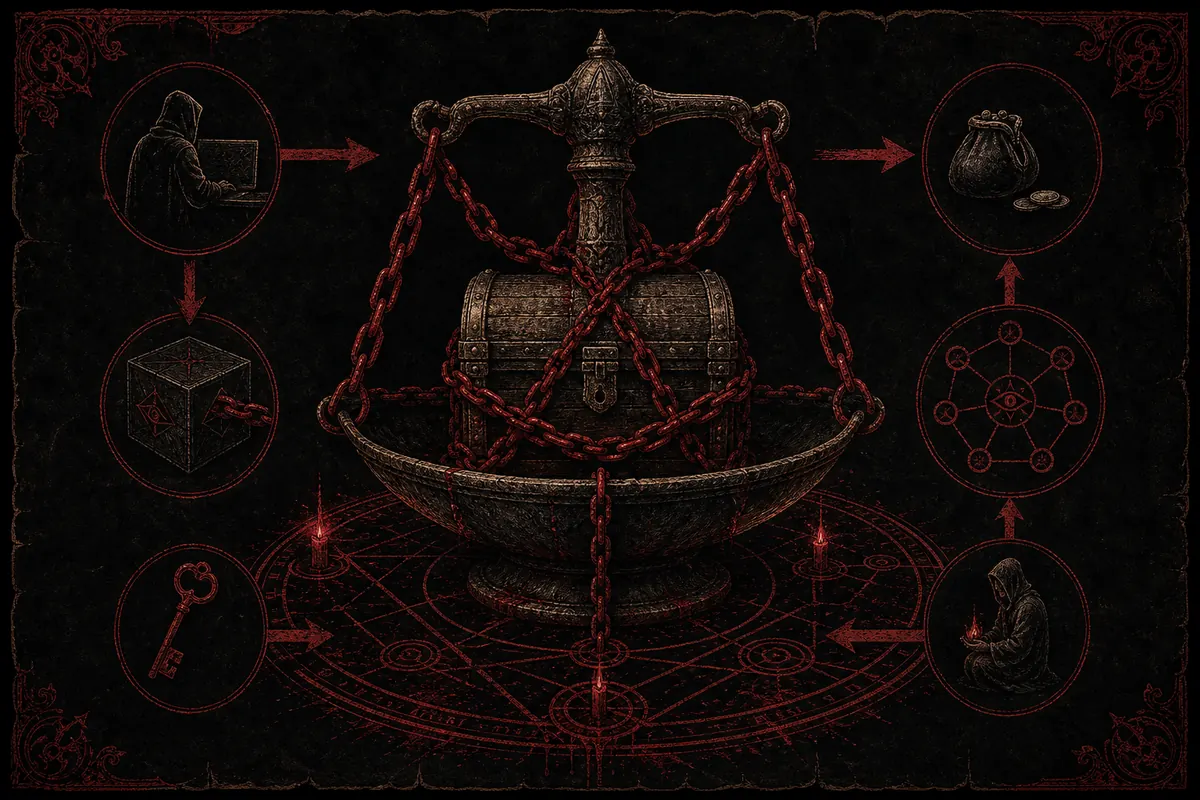
Cryptographic escrow is the cornerstone of trust on the Nexus Marketplace and other darknet markets. This explainer covers how escrow functions, the difference between standard and multisig variants, and what it means for transaction security.
What Is Cryptocurrency Escrow?
Escrow holds funds in a third-party-controlled wallet until predetermined conditions are met. In standard darknet escrow, the marketplace platform holds funds. When the buyer confirms receipt, funds release to the vendor. If a dispute arises, the platform arbitrates and releases funds to the winning party.
Standard Escrow vs Multisig on Nexus
Standard escrow requires trusting the marketplace platform not to steal funds. The Nexus darknet has historically maintained that trust, but it is ultimately centralised.
Multisig (multi-signature) escrow changes the trust model fundamentally. In a 2-of-3 multisig arrangement, three parties hold keys: buyer, vendor, and platform arbitrator. Two of three must sign to release funds. The platform alone cannot steal — two signatures are always required.
How 2-of-3 Multisig Works on Nexus Darknet
In a normal successful transaction, buyer and vendor both sign to release funds without involving the arbitrator. If a dispute arises, the arbitrator and either buyer or vendor sign — preventing either party from unilaterally controlling the outcome. This architecture mathematically removes the platform's ability to exit scam users.
Which Coins Support Multisig on Nexus?
Bitcoin natively supports multisig and it is well-tested. Monero's multisig implementation is functional but more complex operationally. Users seeking maximum security should use BTC multisig escrow for large transactions while XMR offers better baseline payment privacy. The cryptocurrency guide covers both options in detail.
Published: August 24, 2025 | Category: Darknet Research | ← Return to Chronicle